The phrase tree lopping service Sydney remains popular because homeowners want large trees made smaller quickly. The problem is that “lopping” can mean anything from removing a few overhanging limbs to cutting a mature canopy back to bare stubs. Those outcomes are not equivalent. Modern arboriculture favours specific pruning objectives and carefully placed cuts rather than indiscriminate reduction.
Before booking, ask the contractor to describe the work as crown lifting, thinning, reduction, deadwooding, clearance pruning or removal. Precise language makes the scope clearer and gives you a better basis for comparing quotes.
What Lopping Usually Means
Traditional lopping often involves cutting large branches back without respecting the tree’s natural structure. The result may look smaller immediately, but the tree can respond with fast epicormic shoots. These shoots may attach weakly, grow rapidly and create a recurring hazard. Large wounds also take longer to close and can become entry points for decay.
A proper crown reduction shortens the canopy by cutting back to suitable lateral branches. The remaining lateral should be large enough to assume the role of the removed branch and should point in an appropriate direction. Crown thinning removes selected secondary branches throughout the crown, reducing density without changing overall dimensions.
Crown lifting is different again. It removes lower branches to create clearance over a driveway, path or lawn. Deadwooding removes branches that are already dead or failing. A contractor who recommends the same aggressive cut for every tree is not providing tailored arboriculture.
Sydney Conditions and Species
Sydney’s trees respond to a mix of coastal wind, heat, drought, intense summer storms, sandstone soils and compacted urban ground. Mature eucalypts may drop deadwood during stress. Figs can develop large buttress roots and heavy limbs. Liquidambars may lift paths with surface roots. Palms have different risks from broadleaf trees and should not be managed with the same assumptions.
On the North Shore, steep blocks and narrow access can require ropes and hand-carrying. In the Inner West, heritage streetscapes and terrace courtyards create tight working zones. Western Sydney properties may have more room, but new development and bushfire controls can affect approval. The local setting should shape the method.
Council Rules Before Work
Approval requirements depend on the council, species, tree size, heritage status and amount of pruning. Check the Service NSW tree-removal referral guidance, then read the relevant council’s current tree controls. The City of Sydney provides pruning and removal guidance, but its rules should not be treated as a statewide standard.
Some exemptions apply to small trees, listed weed species, dead trees or urgent hazards, but evidence may be required. Photograph the tree before work if relying on an exemption. A contractor should not tell you that permission never matters simply because the service is called lopping.
The Safety Plan
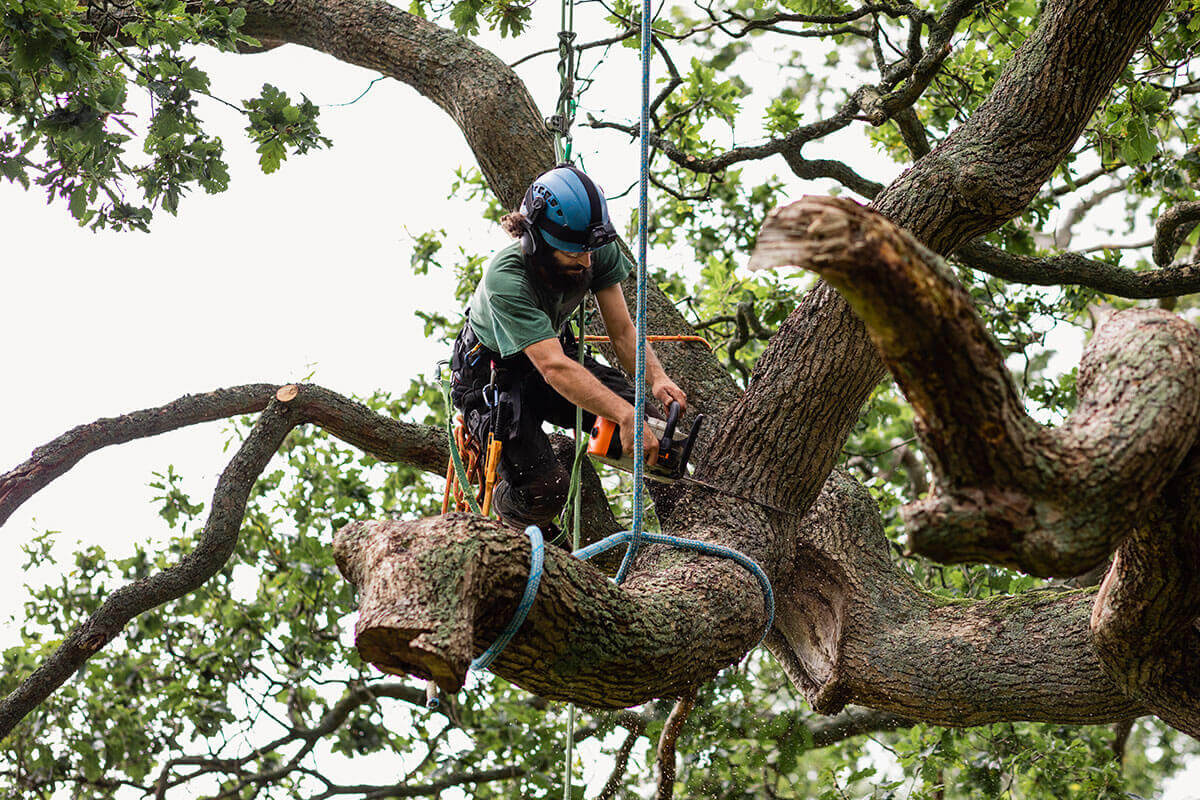
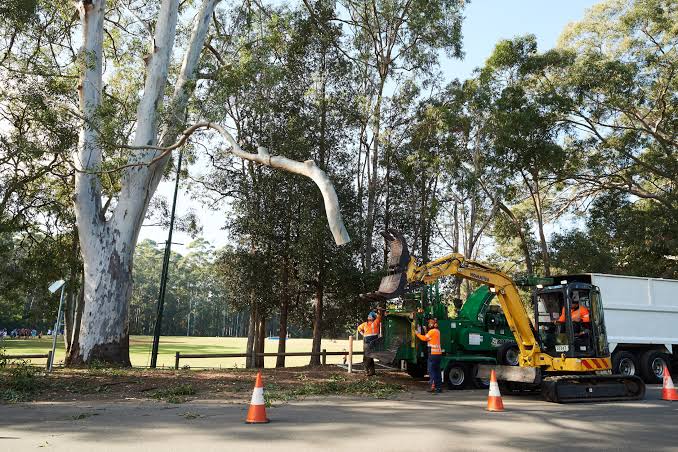
A tree lopping service Sydney business should plan for falls, falling limbs, chainsaw hazards, chipper injuries and electrical risks. The crew should set an exclusion zone and keep people away from the drop area. The climber and ground team need clear communication. Branches near buildings should be lowered under control rather than dropped.
The Safe Work Australia guide to managing tree-work risks covers pruning, lopping, removal, chipping and stump grinding. Look for helmets, face and hearing protection, suitable climbing equipment and safe work procedures. Ladder chainsaw work on a large tree is a serious warning sign.
Pricing in Sydney
Light lopping or clearance pruning may cost $250 to $700. Medium crown work commonly ranges from $700 to $2,000. Larger reductions on mature trees can cost $1,500 to $4,500. Difficult access, dense hardwood, power lines, rigging, elevated platforms, cranes and disposal increase the total.
Ask whether the quote includes chipping, timber removal, raking and green waste disposal. Confirm whether the stump is separate. A low price can hide a labour-only scope, while a higher quote may include all processing and clean-up.
How to Compare Contractors
Request the legal business name, public liability certificate and workers compensation details. Ask who is doing the climbing and whether a qualified consultant is required for a report. A contractor should inspect the tree rather than quote from a photo for complex work.
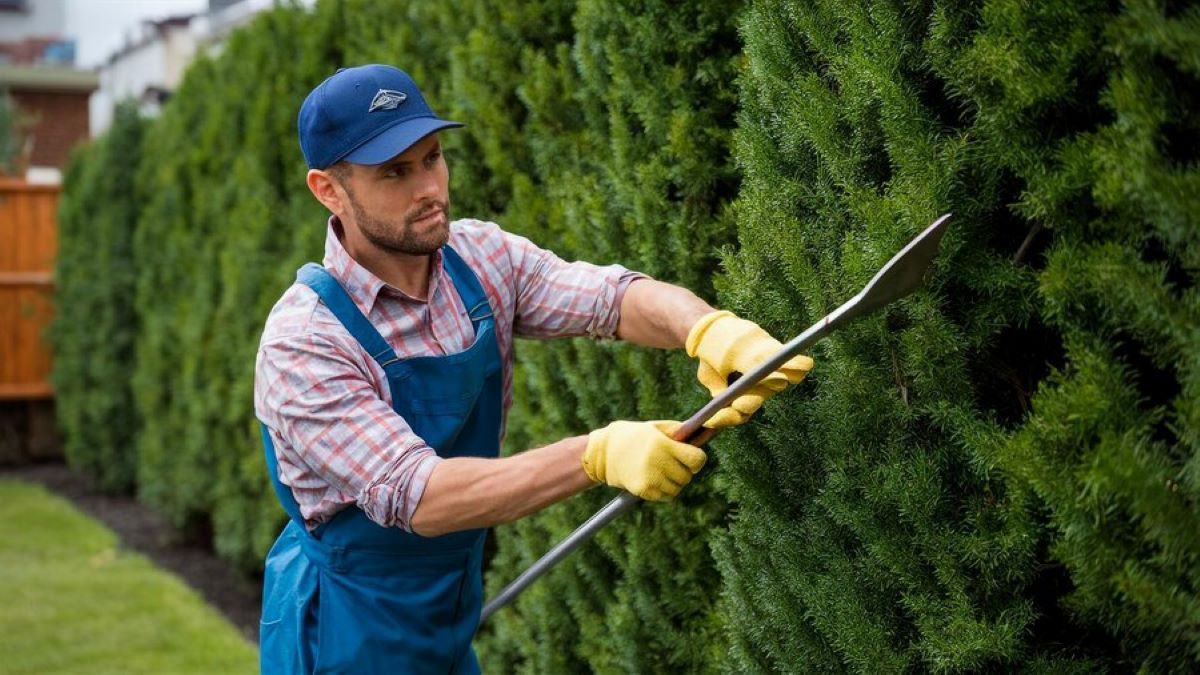
Ask what percentage of the canopy will be removed and how the tree is expected to respond. If the recommendation is to remove major leaders or cut everything to the same height, seek a second opinion. The University of Melbourne arboriculture program demonstrates that tree management is a specialised discipline, not cosmetic hedge trimming.
Alternatives to Heavy Lopping
If the issue is shade, selective thinning may improve light. If branches touch a roof, clearance pruning may be enough. If one limb is defective, remove that limb rather than the entire canopy. If a tree is too large for the site and repeatedly requires severe cuts, removal and replacement with a better-sized species may be more honest.
Where a tree has habitat value, ask whether a safe standing stem or habitat pole can be retained. Not every hazardous tree can be saved, but partial retention may preserve ecological value when the site allows it.
What Happens to the Cut Material?
Clean chip can be left as surface mulch. Keep it away from tree trunks, walls, vents and termite barriers. Sound hardwood rounds can be retained as firewood if they are cut into manageable pieces. Material taken off site should go to a lawful organics facility. The NSW EPA garden-organics guidance is useful when checking disposal arrangements.