Practical Advice
Arborist services Sydney property owners use can range from a short tree-health inspection to a detailed report for council or a development application. The word arborist appears in many advertisements, but it does not by itself explain the person’s qualification, independence or role. Before booking, establish whether you need a consulting arborist, a tree worker or both.
A consulting arborist assesses the tree and prepares advice. A practising arborist or tree worker carries out pruning, removal, climbing and related physical work. Some businesses provide both services, while others keep assessment and contracting separate. That distinction matters when a removal recommendation is disputed or a council requires an independent report.
What a Consulting Arborist Assesses
An assessment may consider species, age, condition, structure, defects, root zone, targets and likely consequences of failure. The arborist services Sydney may look for cavities, included bark, fungal fruiting bodies, deadwood, cracks, poor unions, root-plate movement and construction damage. A visual assessment cannot guarantee that a tree will never fail, but it can identify observable hazards and recommend proportionate controls.
A report should identify each tree clearly, include photographs, explain the observations and connect them to the recommendation. It should not simply say “remove” without describing why pruning, monitoring, support or partial retention are unsuitable.
When a Report Is Useful
A formal report is often useful when a protected tree is proposed for removal, a development is near retained trees, a neighbour alleges danger, an insurer needs evidence or a dispute may proceed to mediation or court. Reports can also support better retention decisions by showing that only deadwood or one defective stem needs attention.
For construction sites, the report may define a Tree Protection Zone, root protection requirements, fencing, ground protection and supervision hold points. Compaction, trenching and soil-level changes can damage a tree even when no branch is cut.
If your concern is simply a small branch rubbing on a roof, a full formal report may not be necessary. Ask the consultant to match the service to the decision you need to make.
Council Applications in Sydney
Council requirements differ across Sydney. The NSW Government tree-removal referral information is a useful starting point, but the relevant council’s local policy controls the application. The City of Sydney publishes guidelines for residents and arborists, including expectations for consultant reports.
Check whether the tree is heritage-listed, protected under a development control plan, within a significant-tree register or affected by a development application. Do not assume that a report prepared for one council will satisfy another council’s format or qualification requirements.
Understanding Risk Language
Arborists may describe a defect as low, moderate or high risk, but the rating depends on both the likelihood of failure and the consequence if failure occurs. A tree in an empty paddock is different from an identical tree over a bedroom. Risk advice should explain the target, time frame, monitoring interval and recommended control.
A high-risk tree does not always mean immediate removal. Controls might include excluding people from a target area, removing a dead limb, reducing a defective branch, installing support or monitoring after severe weather. Removal becomes more compelling when the defect is serious and there is no practical way to reduce exposure.
Choosing the Right Consultant
Ask about qualifications, professional experience, report examples and familiarity with the council involved. For formal reports, many councils expect AQF Level 5 arboricultural training or equivalent. Confirm whether the consultant is independent of the contractor who will quote for removal.
Ask whether additional testing is needed. Advanced inspection, root mapping, decay detection or resistograph testing may add cost, but these tools are not required for every tree. A good consultant explains why a test would change the decision.
The University of Melbourne Graduate Certificate in Arboriculture reflects the specialist academic foundation available to professionals managing urban trees. Practical experience with Sydney species and local conditions matters too.
Typical Costs in Sydney
A basic site assessment may cost $250 to $600. A formal AQF Level 5 report might range from $450 to $2,500 depending on tree numbers, mapping, testing, development complexity and the level of detail required. A report for a large development site can cost more.
The cheapest report is not necessarily good value if it fails to answer council’s questions. Before accepting a price, ask what is included, whether a site plan will be marked, how many trees are covered and whether the consultant will respond to council requests for clarification.
Working With a Tree Crew
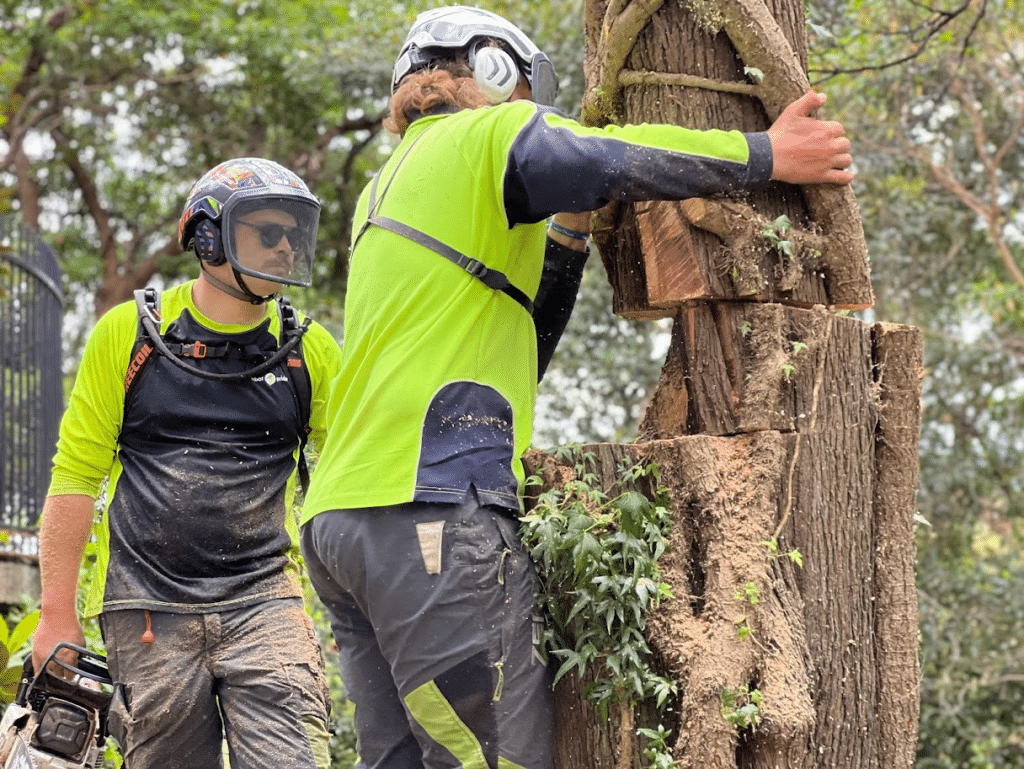
After the recommendation is clear, engage a suitably insured contractor for the physical work. Give the crew the report and insist that the scope follows it. If the report recommends selective pruning but the contractor proposes removal, ask why and consider returning to the consultant.
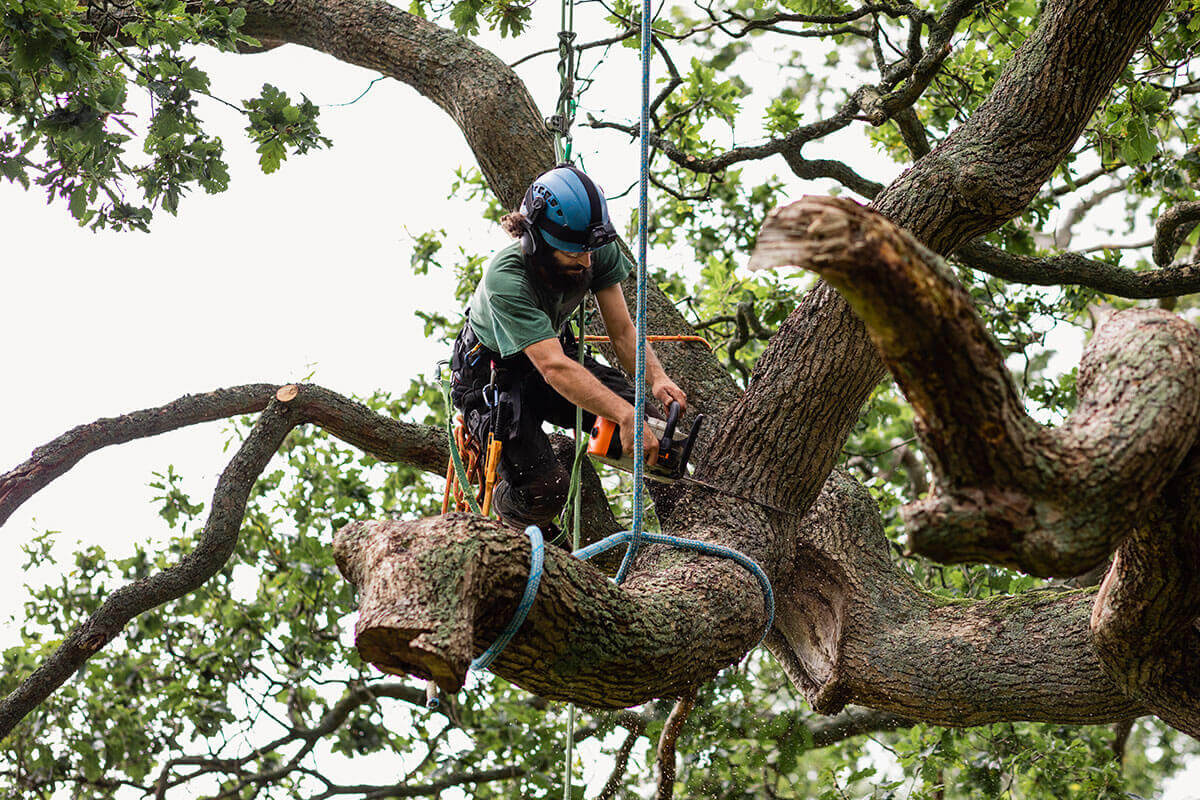
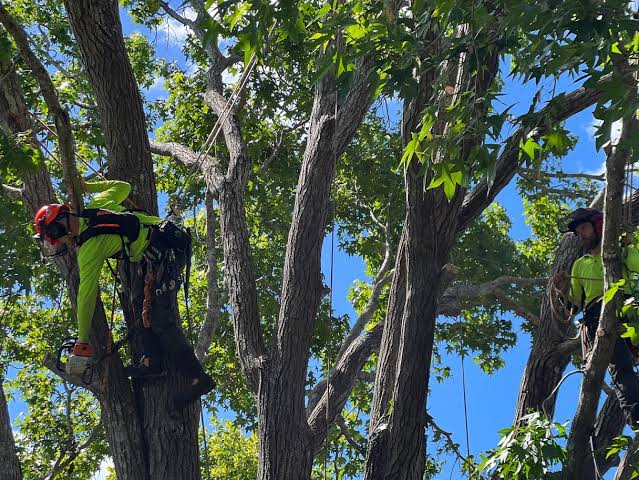
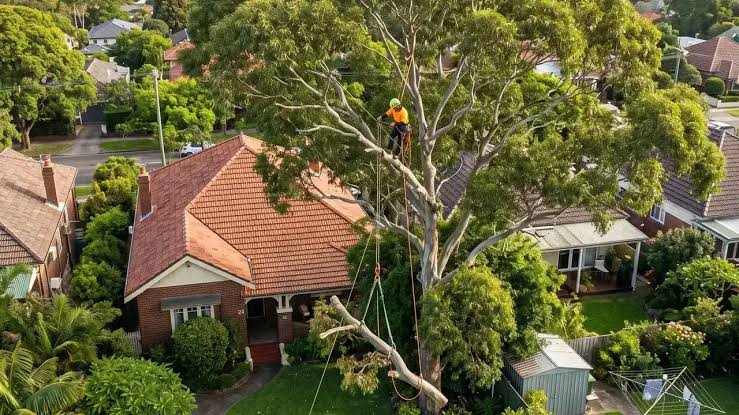
For work at height, expect an exclusion zone, appropriate PPE, safe climbing systems and controlled lowering. The Safe Work Australia tree-work guide covers the hazards associated with trimming, removal, chipping and stump grinding.
Development and Tree Protection
If construction is planned near a retained tree, protection must be installed before machinery arrives. Do not store materials, park vehicles or wash concrete inside the protection zone. Avoid cutting roots unless a project arborist has assessed them. A tree may look healthy while construction damage is slowly reducing its stability.
Document inspections and hold points. The cost of an arborist during construction is small compared with replacing a mature tree or dealing with a failed approval condition.
Neighbour Disputes
A neighbour’s opinion that a tree is dangerous is not the same as an arborist assessment. Invite the owner to obtain independent advice and keep communication in writing. Describe observable concerns such as dead branches, cracking or root movement rather than making accusations. A report can clarify whether pruning, monitoring or removal is proportionate.
Healthy canopy has value. Research from Australian universities has repeatedly examined the cooling, ecological and social benefits of urban trees. Retention should be considered where the risk can be managed.
Red Flags in Reports
Be careful with reports that contain no photographs, identify trees vaguely, recommend removal without alternatives, use unexplained risk ratings or appear copied from another property. Also question a contractor who offers a “free report” only if you authorise removal. Independent advice has value because it is independent.