

What Are the Common Early Signs That Indicate a Hidden Rat Infestation?
1. How Can Rat Droppings Reveal a Rodent Problem?
Rat droppings are the most reliable indicator of a hidden rodent problem in Sydney homes. These small, dark pellets appear in concentrated areas where rats feed, travel, or nest, making them one of the first visible signs homeowners notice.
Rat droppings provide immediate evidence of an active infestation and reveal the severity of your rodent problem. rat control sydney help identify whether droppings are fresh—dark, moist, and soft—or older, which appear dry, grey, and crumbly over time.
Typical characteristics of rat droppings include:
- Size and shape: Cylindrical pellets measuring 12-18mm long with blunt ends
- Color: Dark brown to black when fresh, fading to grey as they age
- Quantity: Multiple droppings clustered in high-activity zones
Common locations where you’ll find rat droppings:
- Behind kitchen appliances and under sinks
- Inside pantries and cupboards near food sources
- Along baseboards and in corners of rooms
- In attics, roof spaces, and wall cavities
- Near water heaters and in garage storage areas
- Behind boxes in storage rooms
The concentration of droppings indicates how established the infestation has become. A handful of pellets suggests recent rat activity, while hundreds of droppings signal a severe, long-standing problem requiring immediate professional intervention.
Health risks from rat droppings pose serious dangers:
Rat feces carry dangerous pathogens that threaten human health through direct contact or airborne particles. Salmonella bacteria causes severe food poisoning with symptoms including fever, diarrhea, and abdominal cramps. Hantavirus presents life-threatening risks when dried droppings become airborne during cleaning, potentially causing hantavirus pulmonary syndrome.
Additional disease risks include leptospirosis from contaminated urine mixing with droppings, and lymphocytic choriomeningitis virus (LCMV) affecting pregnant women and immunocompromised individuals. Rat droppings also trigger allergic reactions and respiratory problems in sensitive people.
2. What Does the Presence of Nesting Materials Suggest About Rats?
Finding shredded paper, fabric scraps, or torn insulation signals active rat nests identification within your property. Rats collect these materials to create warm, hidden shelters where they breed and raise young, making nesting materials rats use a critical indicator of established colonies rather than occasional visitors.
Common nesting locations inside Sydney homes include:
- Wall cavities between studs
- Roof spaces and attic corners
- Behind kitchen appliances
- Inside storage boxes in garages
- Underneath floorboards
The presence of nests creates distinct rodent habitat signs beyond the materials themselves. A strong, musky ammonia-like smell permeates areas surrounding active nests due to concentrated urine deposits. You’ll typically discover droppings scattered around the nest perimeter, along with grease marks on nearby surfaces where rats repeatedly travel. This contamination poses serious health risks, as the confined space concentrates bacteria and pathogens. Discovering these nesting materials rats use demands immediate attention, since each nest potentially houses multiple rats capable of producing dozens of offspring within weeks.
3. Why Are Foul Odors a Warning Sign for Rat Infestations?
One of the most reliable signs of a rat infestation is a persistent musky smell left behind by rodents. The odor of rat urine is distinct and similar to ammonia, becoming stronger in enclosed areas where rats frequently move around. Additionally, if there are dead rodents trapped in walls or under floors, they will emit a foul, sweet smell that worsens over time.
These smells are different from regular household odors because they are stronger and last longer. The musky scent produced by rodents comes from pheromones found in their urine, which rats use to mark their territory and communicate with other members of their colony. This scent builds up along their usual routes, creating concentrated areas of odor near their nesting sites.
You can easily detect rodent infestations by smell in confined spaces such as:
- Cupboards and pantries where stale urine mixes with food smells
- Wall cavities where decomposition causes localized bad smells
- Attic spaces where poor ventilation traps ammonia fumes
The combination of rat urine odor and droppings creates a distinct signature that sets apart hidden rodent problems from other household issues.
4. What Do Noises at Night Indicate About Rodent Activity?
Scratching sounds rodents make during nighttime hours typically signal active rat movement within your walls, ceiling cavities, or roof spaces. These rat noises at night include distinctive gnawing, scurrying, squeaking, and rustling that become most apparent after sunset when household activity quiets down.
Nocturnal rodent behavior drives rats to become most active between dusk and dawn, searching for food and nesting materials while you sleep. The sounds often follow predictable patterns:
- Gnawing: Repetitive chewing noises as rats wear down their constantly growing teeth on wood, pipes, or wiring
- Scurrying: Quick, light footsteps racing along beams or through wall cavities
- Scratching: Clawing sounds against surfaces as rats navigate tight spaces
- Squeaking: High-pitched vocalizations during territorial disputes or mating
These auditory rat infestation indicators concentrate in specific areas like kitchen walls, bathroom ceilings, or attic spaces where rats establish travel routes. The intensity and frequency of sounds reveal colony size—multiple rats create overlapping noise patterns that distinguish them from occasional wildlife visitors.
Interestingly, these nocturnal behaviors are not just limited to urban environments. Research has shown that even in rural settings, the impact of rodent activity can be significant, affecting both the ecosystem and human health.
5. How Can Gnaw Marks Help Identify Rat Problems Early?
Fresh gnaw marks appear lighter in color compared to older marks, revealing the pale wood or exposed copper beneath damaged surfaces. Rats continuously gnaw to keep their ever-growing incisors trimmed, leaving distinct tooth marks approximately 3-4mm wide on wooden beams, furniture legs, and plastic materials throughout your home.
Identifying fresh chew marks becomes critical when they appear on electrical wiring. The exposed copper creates serious fire hazards, as damaged insulation can spark and ignite surrounding materials. Sydney homes with concealed wiring in walls and ceilings face particular risk since these gnaw marks rats create often go unnoticed until electrical problems emerge.
The pattern of damage reveals rodent travel routes:
- Parallel grooves indicate repeated gnawing in the same location
- Rough, uneven edges distinguish rat damage from clean cuts
- Wood shavings or plastic fragments near damaged areas confirm active gnawing
- Darkened older marks show long-term rat activity requiring immediate attention
6. What Are Tracks and Grease Marks Telling You About Rats?
Rats leave distinctive dark smudge marks along their regular travel routes, particularly where their bodies brush against walls, baseboards, and pipes. These grease marks from rats appear as oily streaks caused by the natural oils and dirt accumulated in their fur, creating visible pathways that reveal their movement patterns throughout your home.
Rodent tracks identification becomes easier when examining dusty surfaces or using a flashlight at an angle. Look for these signs of rat movement:
- Four-toed front footprints and five-toed hind footprints
- Tail drag marks between footprints in dusty areas
- Dark smudges concentrated at entry points and corners
- Grease stains appearing darker with repeated use
The concentration of these marks indicates high-traffic areas where rats frequently travel between nesting sites and food sources. Fresh grease marks appear darker and feel slightly oily to touch, while older stains fade to a dull gray. Baseboards showing vertical smudge patterns suggest rats are actively using these routes, making them critical rat infestation indicators requiring immediate attention. For more comprehensive insights on identifying rodent infestations early and the effective extermination methods available, you may find this article on signs of rodent infestation helpful.
7. How Does Damaged Food Packaging Indicate a Rodent Problem?
Signs of Rat Damage to Pantry Items
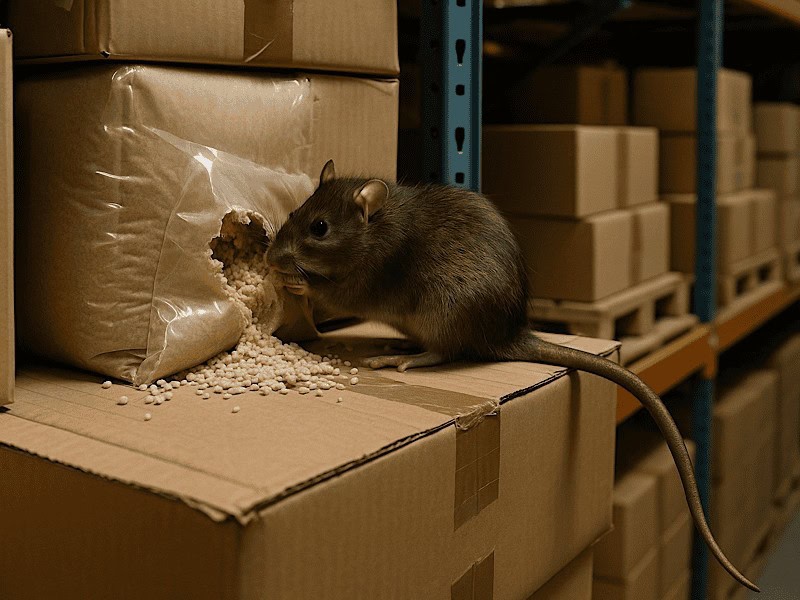
Damaged pantry items are clear signs that rats have been gnawing on your food in your home. Rats have strong front teeth that allow them to chew through cardboard boxes, plastic containers, and even thin metal packaging to get to their food. Look out for irregular holes, torn corners, and bits of food scattered around the affected items.
Signs of Rodent Food Contamination
The signs of food contamination caused by rodents go beyond what you can see. While feeding, rats urinate and defecate, spreading harmful bacteria like salmonella onto your food supplies. This contamination makes the affected items unsafe to eat, even if the damage seems minor.
Common Targets for Rat Damage
Rats often target the following:
- Cereal boxes and grain products
- Pet food bags
- Fruit and vegetable storage areas
- Pantry staples like flour and sugar
What to Look For
When inspecting for signs of rat activity, check for small bite marks along the edges of packages and greasy smudge marks near areas where you store food. These indicators of a rat infestation often appear alongside scattered crumbs and bits of food that rats drop while carrying items back to their nests.
What Health Risks Do Rats Pose to Sydney Households?
Rats carry numerous pathogens that threaten human health through direct contact, contaminated surfaces, and airborne particles. Diseases spread by rats Sydney residents face include rat-bite fever from bites or scratches, leptospirosis transmitted through urine-contaminated water, and lymphocytic choriomeningitis virus (LCMV) from exposure to droppings or nesting materials.
Health risks rodent infestations introduce extend beyond direct transmission. Hantavirus pulmonary syndrome develops when people inhale dust particles contaminated with rat urine or droppings, causing severe respiratory distress. Salmonellosis occurs after consuming food contaminated by rat feces, leading to gastrointestinal illness. Fleas carried by rats spread typhus and bubonic plague, though these remain rare in modern Sydney.
Rat droppings trigger allergic reactions and asthma attacks in sensitive individuals, particularly children and elderly household members. The combination of dried urine, feces, and dander creates airborne allergens that circulate through ventilation systems.
How Do Rats Typically Enter Homes and Why Is Rapid Breeding a Concern?
Rats can enter homes through small openings, such as spaces around pipes, vents, doors, and windows. They also take advantage of gaps in roof eaves, foundation cracks, and utility line entry points to sneak into Sydney homes without being noticed.
Common ways rats get into homes include:
- Unsealed gaps around plumbing and electrical lines
- Damaged roof tiles and worn-out weatherstripping
- Broken air vents and uncapped chimneys
- Cracks in concrete foundations and brick mortar
A single female rat can have up to 60 babies each year through several litters. This rapid reproduction means that a small problem can quickly turn into a large infestation within weeks. Each generation of rats becomes sexually mature in just 3-4 months, leading to overlapping breeding cycles that further increase the population before homeowners start to see the warning signs.
What Are the Recommended Prevention Measures Against Rats in Sydney Homes?
Sealing entry points rodents use to access your property forms the foundation of effective rat prevention tips Sydney homeowners need. Inspect your home’s exterior for gaps larger than 6mm around doors, windows, pipes, and utility lines—rats squeeze through surprisingly small openings. Use steel wool, copper mesh, or metal flashing to block these access points, as rats cannot gnaw through these materials.
Remove potential food sources by storing pantry items in airtight metal or thick plastic containers. Keep outdoor garbage bins tightly sealed and eliminate fallen fruit from gardens promptly. Maintain cleanliness by wiping down kitchen surfaces nightly, sweeping up crumbs immediately, and avoiding leaving pet food out overnight. Trim tree branches that hang within 1 meter of your roofline to prevent rats from using them as bridges into your home.
When Should Homeowners Seek Professional Pest Control Services for Rat Problems?
When to call pest experts rodents becomes necessary once you’ve identified multiple warning signs or spotted live rats in your home. DIY methods often fail to address the full extent of hidden infestations behind walls or under floors.
Professional pest control Sydney rats specialists provide comprehensive solutions that homeowners cannot safely replicate. Experts use protective gear during cleanup to avoid direct contact with contaminated areas carrying hantavirus and salmonella. They locate entry points you might miss, remove nesting materials from inaccessible spaces, and apply targeted treatments that eliminate entire colonies rather than individual rats.
The Rat Control Sydney: 7 Early Warning Signs You Have a Hidden Rodent Problem guide helps identify when professional intervention protects your family’s health and prevents costly structural damage from escalating.
See Also: What does a rat exterminator sydney service actually do? a step-by-step breakdown